Darknet Markets 2026:
The dark web is part of the deep web but is built on darknets: overlay networks that sit on the internet but which can't be accessed without special tools or software like Tor. Tor is an anonymizing software tool that stands for The Onion Router — you can use the Tor network via Tor Browser.
| Darknet Market | Established | Total Listings | Link |
|---|---|---|---|
| TorZon Market | 2022 | 140+ | Onion Link |
| Nexus Market | 2024 | 600+ | Onion Link |
| Abacus Market | 2022 | 100+ | Onion Link |
| Ares | 2026 | 100+ | Onion Link |
| Cocorico | 2023 | 110+ | Onion Link |
Updated 2026-10-27
How a Darknet Link Opens a Secure Shop
A darknet market link is a specialized web address, known as a .onion URL, that provides access to a hidden service on the Tor network. Unlike standard websites, these links are not indexed by search engines and cannot be accessed through regular browsers. The link itself is a cryptographic key, directing your Tor browser to the exact server hosting the market, which is designed to conceal its physical location and the identity of its operators.
Finding a current, working link is the first step, as these addresses change frequently for security reasons. Users typically obtain them from aggregator sites or community forums dedicated to reviewing and verifying darknet markets. The reliability of a link is paramount; a verified link leads to the legitimate market, while a fraudulent one could be a phishing site designed to steal credentials and cryptocurrency. Once a legitimate link is secured, it grants entry to a platform that functions with a familiar e-commerce logic, built upon layers of encryption and anonymity.
How Encryption and Crypto Make Darknet Trade Private
The operational privacy of a darknet market is fundamentally enabled by two technologies: end-to-end encryption and cryptocurrency transactions. These systems work in tandem to separate a user's identity from their market activity.
All communication on a reputable market is encrypted. When a buyer sends a message to a vendor, the content is scrambled using the vendor's public key. This means only the vendor's private key can decrypt it. Market administrators cannot read these messages, and neither can any intermediary that might intercept the traffic. This end-to-end encryption ensures that order details, shipping addresses, and any other sensitive information remain confidential between the two parties directly involved.
Financial privacy is achieved through cryptocurrency, primarily Bitcoin or Monero. These digital currencies allow for pseudonymous value transfer without involving traditional banks or payment processors. While Bitcoin transactions are recorded on a public ledger, they are not directly linked to real-world identities unless that link is established elsewhere. For enhanced privacy, Monero uses advanced cryptographic techniques to obfuscate transaction details by default, making the sender, receiver, and amount confidential.
The process integrates these elements:
1. A user accesses the market via Tor, which anonymizes network traffic.
2. Funds are sent from a user-controlled wallet to the market's escrow system.
3. All order details are secured via end-to-end encryption.
4. Upon completion, the cryptocurrency is released from escrow to the vendor.
This model creates a secure environment for commerce by technically enforcing privacy. The encryption protects the data, and the cryptocurrency protects the financial trail, together forming the core privacy guarantee that defines the darknet market experience.
Easy Shopping on the Darknet
The interface of a modern darknet market is engineered for clarity and efficiency. Upon accessing a verified link, users encounter a layout familiar to any mainstream e-commerce platform. Products are organized into clear categories, complete with search functions, filters, and detailed item pages. This design minimizes operational friction and allows buyers to focus on the transaction.
Product listings are comprehensive, typically including:
- High-resolution photographs of the substance
- Precise weight and purity specifications
- Transparent pricing in Bitcoin or Monero
- Vendor shipping policies and expected delivery timelines
The checkout process is streamlined. Selecting a product, choosing a shipping option, and submitting payment to the market's escrow system are completed in a few clicks. The escrow holds the cryptocurrency until the buyer confirms satisfactory receipt of the order, a mechanism that directly incentivizes vendor reliability. Communication with vendors is facilitated through an internal, encrypted messaging system, allowing for discrete clarification of details without exposing either party's external contact information.
This user-centric design, combining familiar online shopping logic with robust cryptographic security, reduces the technical barrier to entry. It transforms the procurement process into a routine transactional experience, where the primary differentiators from conventional retail are the enhanced privacy measures and the nature of the goods exchanged.

How Ratings and Escrow Make Buying Safer
The foundation of a functional darknet market is a trustless system where buyers can engage with confidence. This is achieved through two interconnected mechanisms: vendor ratings and escrow services. These features directly address the inherent uncertainty of anonymous commerce by creating a transparent and secure framework for transactions.
Vendor profiles display a detailed feedback history, similar to mainstream e-commerce platforms. Each completed transaction allows the buyer to leave a rating and a comment regarding product quality, shipping speed, and stealth packaging. A vendor with a long history of positive feedback and a high transaction count demonstrates reliability. This system incentivizes vendors to maintain high standards, as their reputation is their primary asset and directly influences future sales.
The escrow system acts as a neutral third party for financial transactions. When an order is placed, the buyer's cryptocurrency is held in market escrow and is not released to the vendor until the buyer confirms satisfactory receipt of the product. This process typically involves:
- Buyer sends payment to the market's escrow address.
- Vendor ships the product upon seeing the secured payment.
- Buyer finalizes the order upon receipt, triggering the escrow release.
- If a dispute arises, market moderators can intervene to review evidence and adjudicate, potentially refunding the buyer.
This combination of public reputation metrics and secured financial holding minimizes risk. It shifts the power dynamic, protecting the buyer from scams while ensuring honest vendors are promptly paid. The entire process is automated and enforced by the market's software, creating a self-regulating environment where trust is built through verifiable performance rather than personal assurance.
A Huge Selection of Quality Products
The product diversity on a darknet market is its primary economic driver, moving far beyond common street-level offerings. These platforms function as specialized e-commerce hubs where psychoactive substances are cataloged with precision. A buyer can find everything from well-known stimulants and depressants to psychedelics and pharmaceutical research chemicals, each with detailed descriptions on purity, expected effects, and dosage.
This variety is systematically organized. Vendors operate storefronts with product listings that include:
- High-resolution photographs
- Batch-specific laboratory analysis results for potency and adulterants
- Clear pricing by weight or unit
The environment supports informed consumer choice. A user seeking a particular experience, such as a specific strain of Psilocybe cubensis mushroom or a measured dose of a lysergamide, can compare dozens of international vendors. This competition incentivizes higher quality and more reliable service, as reflected in the transparent vendor rating and feedback system. The feedback mechanism provides a crowdsourced quality assurance, where reviews detail the speed of shipping, stealth of packaging, and accuracy of the product relative to its description.
Access to this range fulfills demand for substances that may be unavailable, prohibitively expensive, or of uncertain quality in a user's local physical environment. The market's structure transforms acquisition into a standardized procurement process, mirroring conventional online retail but for a specialized category of goods.
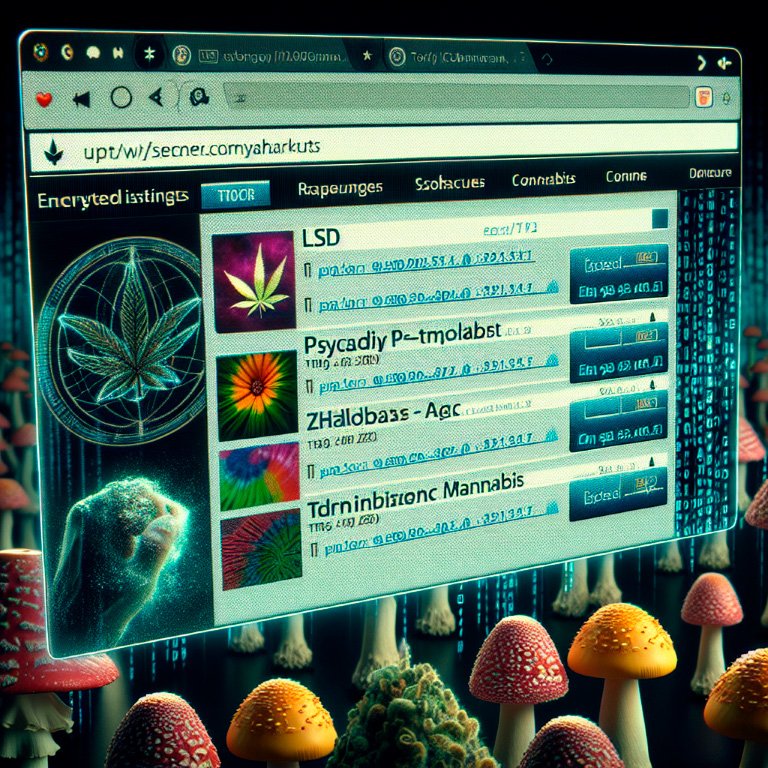
How Darknet Markets Keep Your Shopping Private
The architecture of a darknet market is fundamentally engineered to separate your personal identity from your purchasing activity. This is achieved through a mandatory combination of specialized software and cryptographic protocols. Access requires the Tor Browser, which routes your connection through multiple encrypted layers, effectively obscuring your original IP address and physical location from the market servers and any network observers.
Once connected, the market's internal design enforces further protections. User communication with vendors is conducted via end-to-end encrypted messaging, ensuring that only you and the vendor can read the contents. Market administrators cannot access these private conversations. Financial transactions are handled exclusively with cryptocurrencies like Bitcoin or Monero, which operate on decentralized networks. While Bitcoin offers pseudonymity, markets often recommend Monero for its superior privacy features, as it obfuscates transaction details by default, making financial tracing exceptionally difficult.
Critical operational features also contribute to anonymity. The escrow system acts as a trusted third party, holding funds until you confirm satisfactory receipt of your order. This prevents direct financial disputes between buyer and seller that could lead to identity exposure. Furthermore, the vendor rating and review system allows for informed decision-making based on community feedback without requiring personal interaction or trust outside the platform's secured environment. The collective effect of these integrated systemsTor, cryptocurrency, encrypted messaging, and escrowcreates a robust framework where your anonymity is maintained by design, not by chance.
How Darknet Markets Keep Users and Sales Secure
A reliable darknet market link is the first critical component in a multi-layered security architecture. This link, typically a .onion URL, provides encrypted access to the market's servers, which are hosted on the Tor network. The design inherently protects user anonymity by routing traffic through several encrypted nodes, making it extremely difficult to trace the connection's origin or destination.
Market administrators implement operational security measures that extend this protection. These include:
- Regularly rotating official mirrors and backup links to mitigate DDoS attacks and link takedowns.
- Employing sophisticated server hardening and keeping minimal logs to protect both vendor and buyer data in the event of a seizure.
- Utilizing end-to-end encryption (PGP) for all private messages, ensuring that even market staff cannot read sensitive communication between users.
For the user, security is reinforced through mandatory practices. Buyers are required to use PGP encryption for shipping addresses, meaning this sensitive information is never stored in plaintext on any server. The widespread use of multisignature (multisig) escrow further decentralizes risk. In this system, a cryptocurrency transaction requires two or more private keys to release funds, often involving the buyer, vendor, and a third-party arbitrator, which prevents exit scams by market owners.
The financial layer relies on the inherent privacy of cryptocurrencies like Monero (XMR) or the careful use of tumbled Bitcoin. This breaks the transparent transaction trail on a public blockchain, adding a crucial financial anonymity layer that complements the network anonymity provided by Tor. The overall security model is therefore not a single feature but an integrated system where the secure link, encrypted communication, anonymous payment, and operational protocols work in concert to create a resilient environment for commerce.